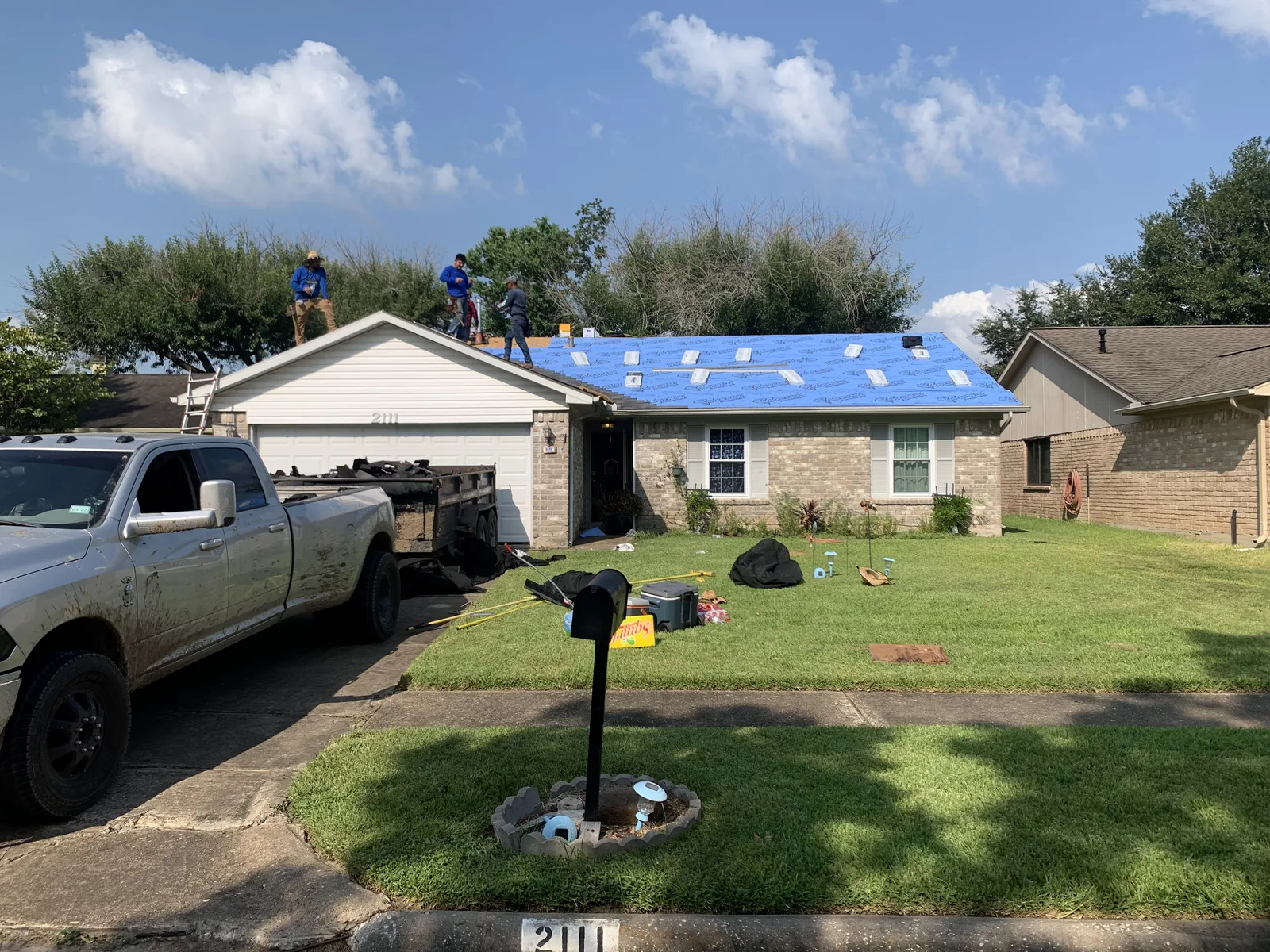

Curling shingles, granules in the gutter, daylight in the attic, a sagging ridge. Here are the seven signs a Central Texas roof is ready for replacement, and a simple way to tell a repair from a full replacement.
If you live in Killeen, Copperas Cove, Belton, or anywhere near Fort Cavazos, your roof works hard. Central Texas hail comes through in spring. The summer heat bakes shingles for months. Over time that wear adds up, and one day a repair stops being enough.
Central Texas sits in a stretch of the country that sees hail often. Texas reports more major hail events than almost any other state, year after year, according to NOAA Storm Events data. When you own a roof here, storm wear is not a maybe. It is a matter of when.
The tricky part is knowing the moment your roof crosses the line. Most roofs do not fail all at once. They give you signs first. Here is how to read them, and how to tell a simple fix from a full replacement.
1. Shingles that curl, cup, or buckle
Healthy shingles lie flat. When the edges start to lift or the middles start to dip, the shingle is drying out and losing its grip. Central Texas heat speeds this up.
There are two shapes to watch for. Curling is when the edges turn up like the corner of an old photo. Cupping is when the middle sinks and the sides rise. Both mean the shingle has lost its flex and is pulling away from the roof.
A few curled shingles near a vent might just need attention. When curling spreads across a whole slope, the roof is telling you its life is near the end.
2. Granules piling up in the gutter
Those tiny sandy bits are the shingle's sunscreen. They protect the asphalt underneath from the sun. After a hailstorm or just years of heat, they wash loose and collect in your gutters and at the bottom of downspouts.
A handful after a new roof settles is normal. That is just the loose granules coming off. Piles of it, plus shingles that look bald or shiny, means the protection is gone. Once the asphalt is bare, the sun cooks it, and the shingles wear fast.
Run your hand along the bottom of a downspout. If it comes back gritty every time you check, that is granule loss you can feel.
3. Daylight or water stains in the attic
Grab a flashlight and go into the attic on a bright day. If you see daylight coming through the roof boards, water can get in the same way. Look also for dark stains on the wood, damp insulation, or a musty smell.
This is one of the clearest signs. The decking, the wood layer under your shingles, may already be soft. Press on a stained board. If it gives under your hand, the wood is wet. That is a replacement conversation, not a patch.
4. Leaks that keep coming back
One leak in one spot after a big storm can often be repaired. But if you have patched the same area twice, or new stains keep showing up on the ceiling in different rooms, the problem is bigger than one spot.
The water is finding its way through a roof that has given up. A stain that spreads, or one that returns after every rain, points to a broad failure and not a single bad shingle. Chasing leak after leak usually costs more than replacing the roof once and being done.
5. Your roof is simply old
Age matters. A typical asphalt shingle roof lasts around 15 to 20 years, and Central Texas sun can shorten that. Heat is hard on asphalt, so a roof here often ages faster than the same roof up north.
If you do not know how old your roof is, ask the previous owner or check any paperwork from closing. The permit records at your city office can also tell you when the last roof went on.
A roof near or past that age, even one that looks okay from the ground, is worth an honest look before the next storm tests it.
6. Storm and hail damage
This is the big one here. Hail bruises shingles, knocks granules loose, and dents soft metal like gutters and vents. Sometimes the damage is easy to see. Often it is not, and an untrained eye will miss it from the driveway.
Hail damage hides in plain sight. A bruise is a soft spot where the stone knocked the granules loose and cracked the mat underneath. You often cannot see it from the ground, but water finds it fast.
After a storm, it pays to have someone get on the roof and document what is actually up there. If the damage is real, your insurance may cover much of the work. The Insurance Institute for Business and Home Safety has shown how hail can shorten a roof's life even when the surface still looks fine from below.
7. A sagging roofline
Stand across the street and look at the ridge, the top line of your roof. It should run straight. If it dips or looks wavy, that points to trouble underneath, in the decking or the structure.
Sagging usually means water has been sitting in the wood for a long time, or the deck was never strong enough to start with. This is not a wait-and-see sign. Do not put this one off.
Repair or replace? How to tell
Not every sign means a new roof. Here is a simple way to think about it.
- Lean toward a repair when the damage is in one small area, the rest of the roof is in good shape, and the roof still has years of life left.
- Lean toward replacement when the wear is spread out, the roof is old, you have repeated leaks, the decking is soft, or hail has hit the whole surface.
A rough rule we use: if the cost to repair is climbing toward half the cost to replace, and the roof is already past the halfway point of its life, replacement is usually the smarter spend. You stop paying for patches that do not last.
An honest inspection settles it. At OSAAT, when we replace a roof, we do a full tear-off down to the decking and inspect that wood before anything goes back on. No shortcuts, no covering problems up.
The neighborly way to find out
We are OSAAT Roofing and Construction, owner-led right here in Killeen. Christopher and Richard built this company to serve Central Texas the honest way, and an owner is on every job. We are fully insured and a Worthouse Certified Contractor, with a 5.0 rating on Google.
We document every stage with photos and video, tarp your driveway, sweep for nails front and back yard, and meet your insurance adjuster on-site. You get a real point of contact, not a call center, and no high-pressure sales. Se habla espanol. We also offer discounts for active and retired military and first responders, plus financing through Hearth with rates as low as 0 percent.
If a few of these signs sound like your roof, the smart next step is a free, no-pressure inspection. We will get up there, show you what we find with photos, and give you the honest answer. Call or text us at (512) 791-5774 whenever you are ready.
Frequently Asked Questions
How often should I have my roof inspected in Central Texas?
At least once a year, and again after any big hail or wind storm. Our springs bring the worst hail, so a check in late spring is smart. A yearly look catches small problems before they turn into leaks.
Can I tell if I have hail damage from the ground?
Usually not. Hail bruises and granule loss are hard to spot without getting on the roof. Dented gutters or downspouts are a clue, but the real evidence is on the shingles themselves. That is why we get up there and document it with photos.
How long does an asphalt shingle roof last in Texas?
Around 15 to 20 years is typical, though the Central Texas sun can shorten that. Heat dries out the asphalt faster than a milder climate would. If your roof is past 15 years, it is worth an honest inspection even if it looks fine from the ground.
Is a sagging roofline an emergency?
It is one of the few signs we tell people not to sit on. A dip in the ridge points to a problem in the decking or the structure underneath. It will not fix itself, and it can get worse fast if water is involved. Get it looked at right away.
Do a few missing shingles mean I need a whole new roof?
Not always. A handful of missing shingles in one spot after a storm can often be repaired. It becomes a replacement question when the wear is spread across the whole roof, the roof is old, or the decking underneath is soft. An inspection tells you which one you are dealing with.
Want a straight answer on your roof? OSAAT gives free, documented roof inspections across Killeen and Central Texas, and we handle storm damage and the insurance claim with you.
Get a free estimate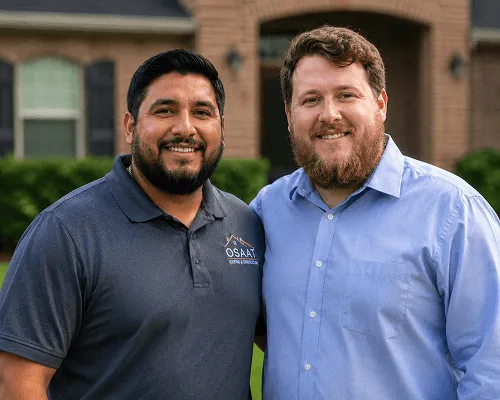
Co-Owner, OSAAT Roofing & Construction.
Last updated July 14, 2026.