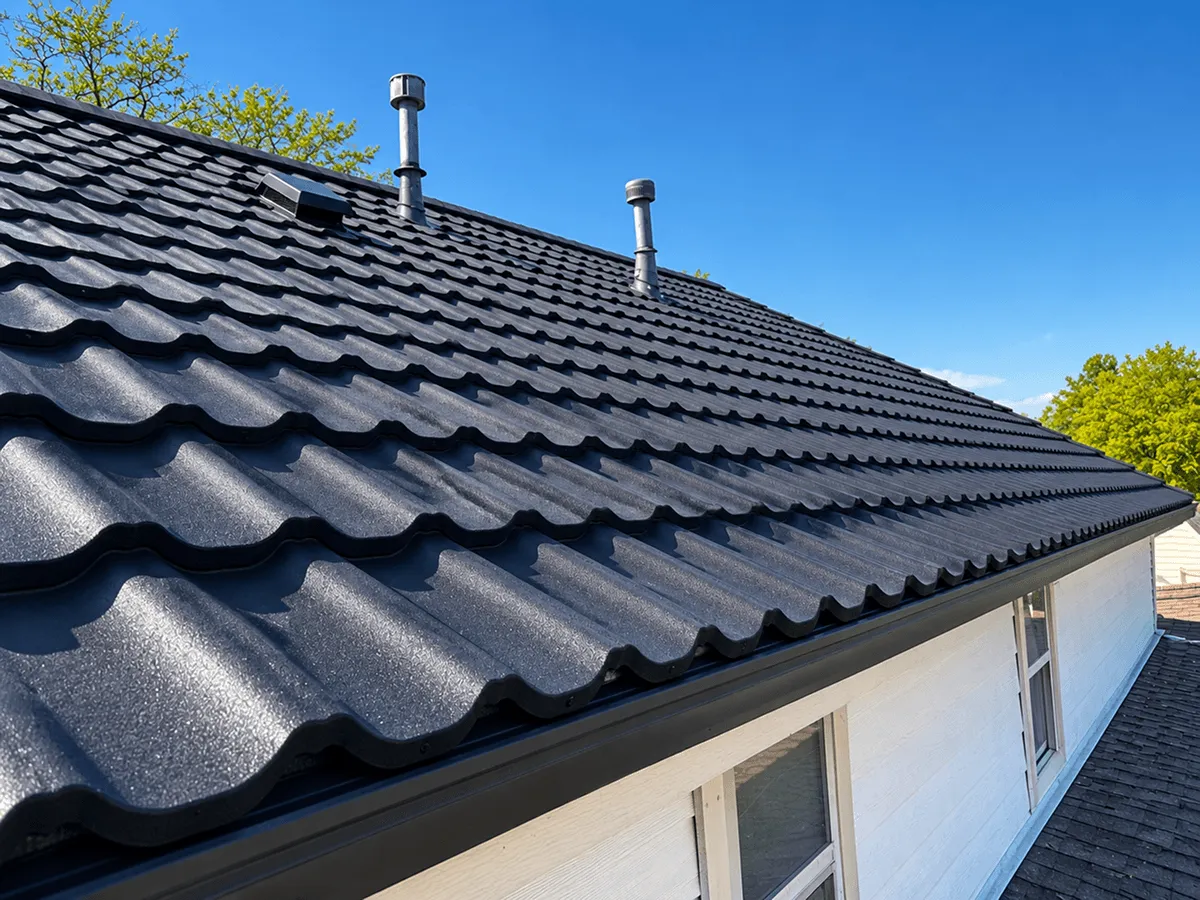

If you're trying to figure out how to fix attic ventilation problems in Killeen, the short answer is this: add or unblock intake vents at the roof's edge and exhaust vents at the ridge so hot air can actually escape. On many inspections across Killeen, we find attics that hit 150°F in August simply because air has nowhere to go.
Quick Answer: How Do You Fix Attic Ventilation Problems in Killeen?
You fix attic ventilation problems in Killeen by creating a clear path for air to move in low and escape high. That means open soffit vents at the eaves pulling in outside air, and ridge or box vents at the top of the roof letting hot air out. Most Killeen homes built in the last 20 years already have both, but insulation, pests, or paint often block them without anyone noticing. A roofer checks airflow at both ends, not just one, because a blocked intake makes an exhaust vent useless. In most cases, this is a repair, not a full roof replacement, and it can be confirmed during a standard roof inspection.
What Killeen Homeowners Usually Notice First
Most homeowners don't start by thinking about their attic. They start by noticing their upstairs bedroom won't cool down, even with the AC running most of the day. Some mention a musty smell when the attic access door opens in July. Others just see a higher electric bill and assume the AC unit is failing.
These are the classic early signs of attic ventilation problems in Killeen homes, even though most people don't connect the dots right away. A Killeen attic without working ventilation can climb well past 150°F on a 97-degree August afternoon, and all that heat pushes down into the living space below it. The AC unit isn't broken. It's fighting a losing battle against a superheated attic sitting right above the ceiling.
A smaller number notice something on the roof itself: shingles curling at the edges, or granules collecting in the gutters faster than they should for the roof's age. That's usually the first sign heat has been baking the decking underneath for too long.
What a Roofing Contractor Looks For
On many roof inspections we see the same pattern behind attic ventilation problems in Killeen: one working vent type and one that's blocked, painted over, or missing entirely. A roofer evaluates this by looking at the attic from two directions at once. First, from inside with a flashlight, checking whether soffit vents are actually open to outside air or have been stuffed with insulation during a past attic project. Second, from the roof, checking whether ridge vents, box vents, or a powered attic fan are actually pulling air through, not just sitting there for looks.
We also check the insulation baffles near the eaves. If a previous insulation job pushed loose-fill insulation right up against the roof deck, it blocks the soffit vents from the inside, even if they look clear from the outside. This is one of the most common causes of attic ventilation problems in Killeen homes built in the 1990s and early 2000s, where insulation was added or topped up without anyone checking the original vent design.
Attic fans get special attention too. A powered fan wired to a broken thermostat, or one pulling conditioned air from the living space instead of just attic air, can make cooling costs worse. We test the fan's actual on/off temperature against what's printed on the dial, since those numbers don't always match after a few years.
We also check the roof deck from underneath. Long-term heat buildup dries out and discolors the plywood or OSB decking, and in older homes we sometimes find nail heads backed out from repeated heat expansion. None of this shows up from the ground, which is why an attic-level inspection matters more than a driveway glance.
Common Mistakes and Misunderstandings
The biggest misunderstanding about attic ventilation problems in Killeen is homeowners assuming "more vents" automatically means "better airflow." Adding a second exhaust vent without checking the intake side can pull air from the wrong place, sometimes drawing hot air back in through gaps instead of pushing it out cleanly. Ventilation works as a system, not as individual parts.
Another common mistake is treating attic ventilation problems in Killeen as strictly an HVAC issue. Homeowners call an AC company, get a bigger unit or a recharge, and the upstairs still runs hot because the real issue was never the equipment. It was the attic dumping heat into the ceiling faster than any reasonably sized AC unit could offset.
We also see homeowners assume a newer roof means ventilation isn't worth checking. Roof age and ventilation performance aren't the same thing. A five-year-old roof with blocked soffit vents traps heat just as badly as an older one.
Decision Guidance: Repair, Upgrade, or Wait?
Not every case of attic ventilation problems in Killeen needs the same fix. If yours is just blocked or painted-over vents, that's usually a straightforward repair done in a single visit. If your home has intake vents but no real exhaust path, adding ridge vents during your next roofing project is usually more cost-effective than retrofitting them separately.
If you're already planning a roof replacement in the next year or two, address ventilation at the same time rather than paying for a standalone fix now and reworking the roofline again later. If the only symptom is a slightly warm upstairs room and the attic checks out fine, the better move might be addressing insulation levels first, since that's sometimes the real gap.
The one situation where we recommend acting quickly is when you're seeing physical roof damage, curling shingles, or soft spots in the decking, alongside the heat symptoms. At that point, the issue has likely been present long enough to start affecting the roofing materials themselves, and waiting another summer will make the eventual fix more expensive.
Local Weather Context: Why Killeen Attics Run So Hot
Killeen's August climate makes this a bigger issue here than in cooler parts of the country. National Weather Service climate data puts Killeen's average August high around 96 to 97°F, with many afternoons pushing past 100°F. Add a dark asphalt shingle roof absorbing direct sun for eight or nine hours a day, and an unventilated attic can run 40 to 50 degrees hotter than the outside air.
That gap is exactly why attic ventilation problems in Killeen show up earlier and hit harder than in a milder climate. During spring storm season, the concern is wind and hail. By July and August, it shifts entirely to sustained heat load, which is when higher energy bills and stuffy upstairs rooms start showing up together. We also see this compound in homes with darker roof colors, common in newer Killeen subdivisions.
On a recent inspection near Fort Cavazos, a homeowner had already replaced their AC unit twice in five years, chasing a problem that turned out to be a single soffit vent blocked by a bathroom exhaust fan installed during a remodel. Once that vent was cleared and a ridge vent added, attic temperature dropped roughly 20 degrees on the next hot afternoon. That's a fairly typical result once the airflow path is restored.
Get Your Attic Checked Before the Next Heat Wave
A hot attic doesn't fix itself, and every summer it goes unaddressed adds stress to your shingles, decking, and AC unit. If you suspect attic ventilation problems in Killeen are behind your higher bills or a stuffy upstairs, have someone check the whole system, not just one part.
Schedule Your Free Attic & Roof Inspection with OSAAT, and we'll check your attic's airflow, your roof's condition, and where the heat is actually getting in. We're a locally owned crew, not a storm-chasing outfit passing through, so if you'd like to talk it through in person, visit us in Killeen, TX.
A quick note: this article is for general information. It's not a guarantee of energy savings or insurance coverage, and every home's ventilation setup is a little different. A proper fix depends on what we find during an actual inspection, and any comments about lowering cooling costs are general in nature, not a promise of a specific dollar amount.
Frequently Asked Questions
Is a hot attic actually bad for my roof, or just uncomfortable inside the house?
Both. The comfort issue is what homeowners notice first, but sustained attic heat also shortens shingle life by drying out the asphalt and accelerating granule loss. In Killeen’s climate, unresolved attic ventilation problems in Killeen homes can knock several years off a shingle roof’s expected lifespan, even if the shingles were installed correctly.
I already have a powered attic fan. Shouldn’t that be enough?
Not always. We regularly find attic fans pulling air from the wrong source, sometimes drawing cooled air up from the living space through gaps around the attic hatch instead of pulling hot air from the attic itself. If the thermostat is miscalibrated, it may not turn on until the attic is already extremely hot. A working fan on the wrong setup can cost more in electricity than it saves.
Can I just add more vents myself instead of hiring someone?
You can, but it’s easy to get the balance wrong. Adding exhaust vents without matching intake capacity, or clustering vents on one side of the roof, creates weak airflow instead of a real cross-draft. Since this can affect your shingle warranty, it’s worth having someone confirm the setup first.
How do I know if this is a ventilation issue and not just an aging AC unit?
Compare attic temperature to outside temperature on a hot afternoon. If the attic is running more than 30 to 40 degrees above the outside air, that points to a ventilation gap rather than the AC unit itself. An inspection can confirm this with an actual reading instead of a guess.
Will fixing attic ventilation lower my energy bill?
It can help, since less heat radiating down through the ceiling means your AC works less to hold the same temperature. We can’t promise a specific dollar amount, since every home’s insulation, duct sealing, and AC efficiency are different. Ventilation is one part of a bigger energy picture, not a standalone fix for a high bill.
Does this affect my roof’s insurance coverage in any way?
Ventilation issues are a maintenance matter, not usually covered by a homeowners policy, and we can’t advise on your specific coverage. If heat has caused visible shingle deterioration, document that separately from any storm-related claim, since your inspection report can serve as that record later.
Want a straight answer on your roof? OSAAT gives free, documented roof inspections across Killeen and Central Texas, and we handle storm damage and the insurance claim with you.
Get a free estimate
Co-Owner, OSAAT Roofing & Construction.
Last updated August 7, 2026.